I examined educational tools which are designed to educate people about misinformation on social media platforms.
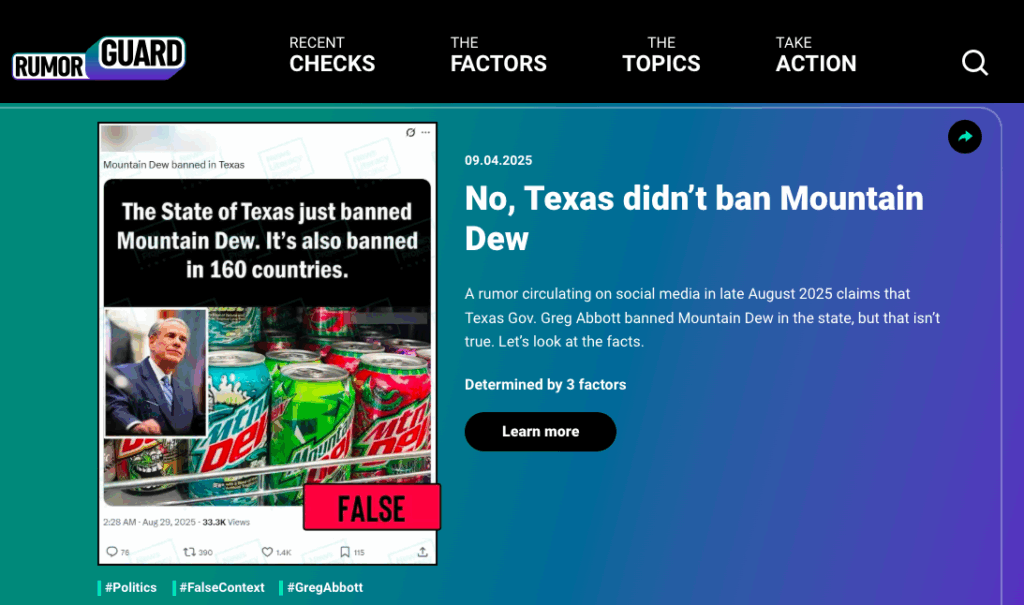
First, this “Rumor Guard “website shows examples to demonstrate how to spot “fake news”. This case caught my eye: a rumor in late August 2025 claiming Texas had banned the popular drink Mountain Dew. This is a FAKE news story.
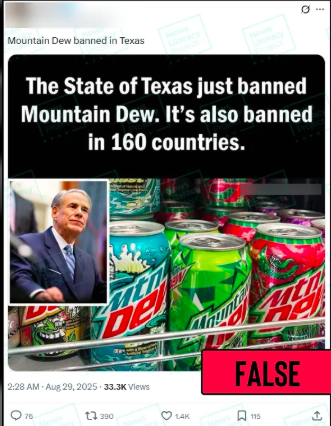
While Mountain Dew has not banned internationally, but the version sold internationally has a different formula to avoid using prohibited ingredients there. The kernel of truth in the Texas rumor was s a new law, SB25, which took into effect on Sep1, 2025. The bill requires manufacturers to add warning labels to food containing ingredients not recommended for human consumption by EU and Japan, including Yellow 5, a synthetic dye which the standard flavor of Mountain Dew includes.
This post was shared on Facebook by by David Wolfe, influencer in the “superfoods” and health community. His post rarely has the full context of the news story.
This rumor gained more credibility in existing political narrative, a recent article “Texas enacts MAHA bills as Kennedy joins Gov. Abbott for signing ceremony.” from the Texas Tribune highlighted how Robert F. Kennedy Jr. had complimented Texas Governor Abbott for this support of health initiatives, aligning with the “Make America Healthy Again (MAHA) bills.
Generally, when it come to topic like the details of public health bill, it is especially more complex and difficult to verify.
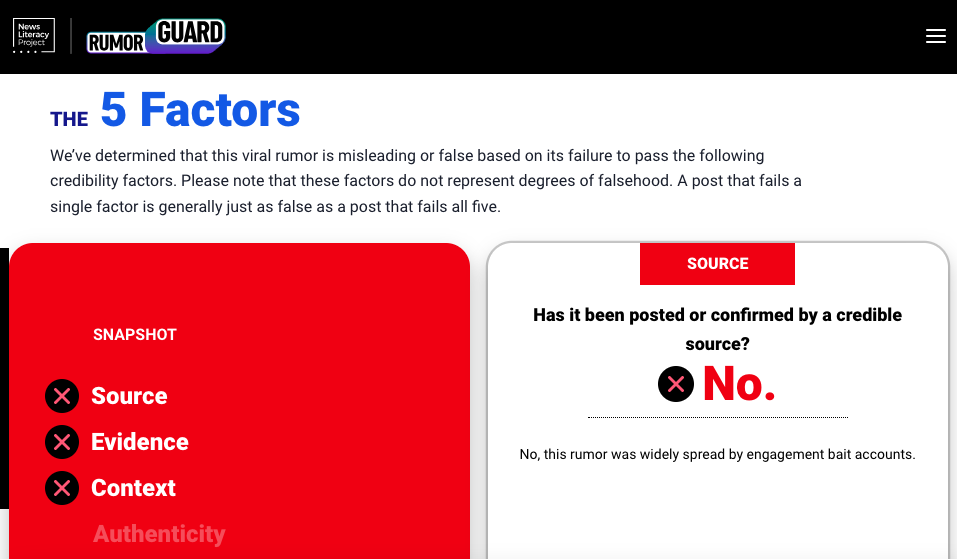
I think this educational tool is highly effective because it teaches users to follow specific check points,
1, Check the evidence.
2, Look for confirmation.
3, Consider the consequences.
In the case of the Mountain Dew rumor, the story fails on those 3 points because it lacks-
1, Reliable Source
2, Confirming Evidence
3, Full Context
This approach tells us how to critically analyze and navigate the flood of information we encounter on social media every day.
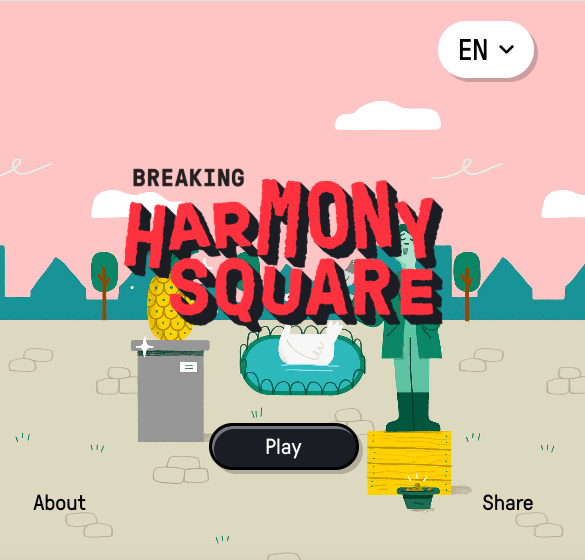
Next, I tried educational game “Breaking Harmony square”. This website is a scientific research project designed to help people understand misinformation on social media by improving their ability to spot manipulation tactics.
My task in this game was to disturb the peace of the “Harmony Square” community and turn people against each other. I soon realized that to to earn more reactions, I had to post harmful or aggressive content. This provokes people’s negative emotional reactions and led to increased engagement, visibility, and potential profit – a tactic known as “rage-bait”. The creator or influencer benefit from the increased traffic, followers and revenue that rage bait generates.
This is how content spreads so quickly on social media: emotions like anger or fear, rage. Algorithm promote content that receives high engagement regardless of its emotional tone, allow rage bait spread quickly.
Rage bait leverages our negative bias- the human tendency to react quickly to threats or or strong opinions. This leads to impulsive engagement before thoughtful consideration.
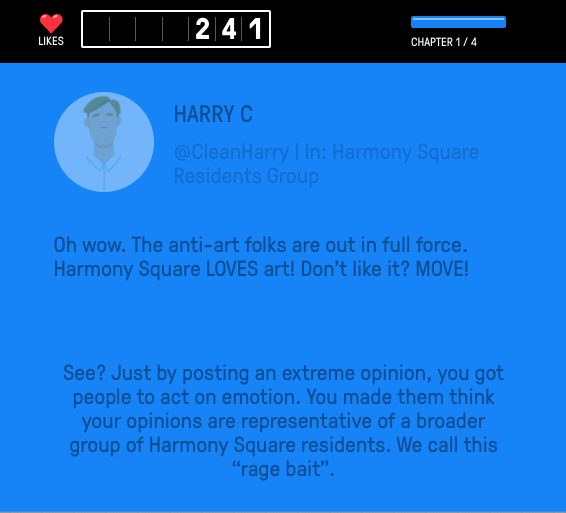
I think this game is effective to help people increase their media literacy and spot manipulation and reduce their willingness of manipulative content with people in their network.
I found interesting article “What is rage-baiting and why is it profitable?” on BBC about rage-bait. They interviewed content creator on social media who earns a lot of money by making rage-bait posts. According to BBC’s investigation, some users on X were “thousands of dollars” by the social media site, for sharing content including misinformation, AI-generated images and unfounded conspiracy theories”.
In this article, Dr William Brady, who studies how the brain interacts with new technologies pointed out the while extreme content on X is made by small number of user but algorithms can amplify as if the are majority and noted that the American election was light on policy, and instead centred around outrage.
Ultimately, these tactics like rage-bait erode public trust and interest to quality journalism. The tools I have explored are essential because they teach us to recognize these emotional traps and reclaim our relationship with information that we consume.
Leave a Reply